Breastfeeding comes with its own learning curve, and one of the biggest decisions new moms face is choosing the right pump. The argument between electric vs manual breast pumps can be perplexing, particularly if you’re already juggling postpartum recuperation, feeding schedules, and sleep deprivation.
Here’s the truth: there is no one-size-fits-all solution. The right pump depends on your lifestyle, comfort, budget, and how often you plan to express milk. In this guide, we’ll break down everything you need to know about both breast pumps so you can confidently choose what works best for you and your baby.
Understanding the Basics of Breast Pumps
Before comparing the two breast pumps, it’s important to understand what each type actually does.
A breast pump helps extract milk from the breast when direct breastfeeding isn’t possible or convenient. This can support milk supply, allow shared feeding responsibilities, or help moms return to work.
There are two main categories:
- Manual breast pumps (hand pump)
- Electric breast pumps
Each works differently, and that difference significantly affects comfort, efficiency, and daily usability.
Electric vs Manual Breast Pump: Key Differences Explained
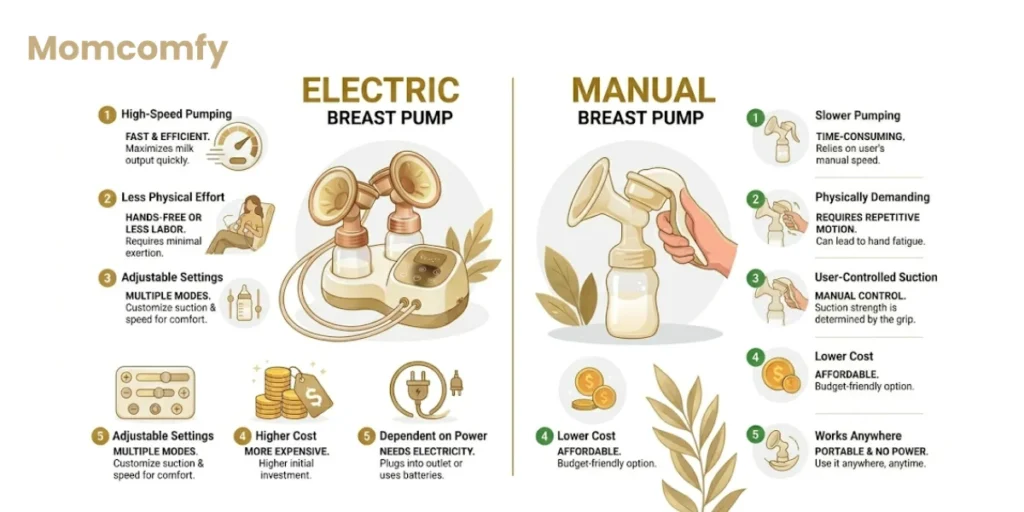
When comparing an electric vs manual breast pump, the main differences come down to effort, speed, and convenience.
1. How They Work
- Manual pump (hand pump): You use your hand to create suction and express milk.
- Electric pump: A motor does the pumping automatically, often with adjustable suction levels.
This basic difference changes everything about the pumping experience.
2. Effort Required
- Manual pumps require physical effort and control.
- Electric pumps reduce strain by doing the work for you.
If you’re pumping frequently, effort becomes a major deciding factor when choosing between electric and manual breast pumps.
3. Speed and Efficiency
Electric pumps are significantly faster. They often express milk from both breasts simultaneously (in double models), saving valuable time.
Because they are slower, manual pumps are best used for brief sessions or infrequent use.
4. Portability and Convenience
- Manual pumps are lightweight and easy to carry anywhere.
- Electric pumps may require charging or batteries and can be bulkier.
For moms constantly on the move, portability often tips the scales in the electric vs manual breast pump debate.
hand pump, manual pump vs electric pump, Pros and Cons
Let’s break down the advantages and disadvantages clearly so you can compare options easily.
Manual Breast Pump (Hand Pump)
A hand pump is simple, affordable, and easy to use in short bursts.
Pros:
- Budget-friendly
- Lightweight and portable
- Quiet operation (no motor noise)
- Easy to clean and assemble
Cons:
- Requires physical effort
- Slower milk expression
- Can cause hand fatigue during long sessions
- Not ideal for frequent pumping
For occasional pumping or travel situations, a manual pump is often enough. However, in the broader comparison, manual options are less efficient for daily use.
Electric Breast Pump
Electric pumps are designed for convenience and regular use.
Pros:
- Faster milk expression
- Hands-free or low-effort operation
- Adjustable suction settings
- Ideal for working moms or frequent pumping
Cons:
- Higher cost
- Requires a power source or charging
- Can be noisy
- Bulkier than manual options
When looking at electric vs manual breast pump, electric models clearly win in speed and convenience, especially for long-term use.
Real-Life Example: A New Mom’s Experience
Let’s take a real-world scenario.
Sara, a first-time mom returning to work after 3 months of maternity leave, initially used a hand pump because it was affordable and easy to carry. However, she quickly realized that pumping multiple times a day at work was exhausting and time-consuming.
After switching to an electric model, her pumping sessions reduced from 25 minutes to around 12–15 minutes. Additionally, she observed more consistent milk expression and less physical strain.
On the other hand, another mom, Ayesha, only needed to pump occasionally for date nights or short outings. For her, the manual pump was perfect, simple, quiet, and cost-effective.
This shows how breast pump choices depend heavily on lifestyle, not just features.
When Should You Choose a Manual Pump?
A hand pump or manual option works best if:
- You only pump occasionally
- You are on a tight budget
- You prefer a simple, low-maintenance tool
- You need something ultra-portable for travel or emergencies
In these cases, the manual pump vs electric pump comparison clearly leans toward manual for practicality and simplicity.
When Should You Choose an Electric Pump?
An electric pump is ideal if:
- You pump multiple times a day
- You are a working mom or student
- You need to maintain or increase your milk supply
- You want a faster, hands-free experience
In the electric vs manual breast pump decision, electric models are the go-to solution for long-term and frequent use.
Cost Comparison: Budget vs Long-Term Value
Cost is often the deciding factor for many families.
- Manual pumps are significantly cheaper upfront.
- Electric pumps cost more but save time and effort.
However, when evaluating breast pumps, it’s important to consider long-term value. If time and convenience are priorities, electric pumps often justify their price.
Comfort and Milk Output: What Really Matters
Comfort plays a huge role in successful pumping.
Manual pumps allow you to control suction manually, which some moms find more comfortable. However, improper technique can cause hand fatigue or uneven suction.
Electric pumps provide consistent suction patterns designed to mimic natural breastfeeding rhythms, which can improve milk flow in many cases.
In terms of breast pumps, electric models often provide a more consistent and less physically demanding experience.
Portability and Lifestyle Fit
Your daily routine matters more than brand or price.
- If you’re frequently traveling or stepping out for short durations, a manual pump is easier to carry.
- If you are managing work, household duties, and regular pumping sessions, electric pumps integrate better into your lifestyle.
This is why the manual pump vs electric pump discussion should always include lifestyle evaluation, not just technical features.
Expert Insight: What Lactation Consultants Suggest
Lactation experts often recommend electric pumps for mothers who plan to pump regularly because they help maintain milk supply more efficiently.
However, they also acknowledge that manual pumps are useful for:
- Emergencies
- Travel backup options
- Occasional expression
This balanced approach shows that an electric vs manual breast pump is not about which is “better” overall, but which is better for your specific needs.
Common Mistakes New Moms Make
When choosing between the two breast pumps, many new moms make avoidable mistakes:
- Choosing based only on price
- Ignoring the pumping frequency
- Not considering portability
- Buying overly complex devices they don’t need
Avoiding these mistakes can save both money and frustration.
Final Verdict: Electric vs Manual Breast Pump
Choosing between an electric vs manual breast pump ultimately comes down to your lifestyle, pumping frequency, and comfort needs.
- If you want affordability, simplicity, and occasional use → a hand pump is a smart choice.
- If you want speed, efficiency, and daily convenience → an electric pump is worth the investment.
Both options serve important roles, and understanding your routine is the key to making the right decision.
For many moms, a combination of both works best: an electric pump for regular use and a manual pump as a backup or for travel.
At the end of the day, the breast pump decision should support your breastfeeding journey, not complicate it. Choose what makes your life easier, your routine smoother, and your baby happier.
FAQ
Is an electric breast pump better than a manual one?
An electric pump is generally better for frequent use because it is faster, more efficient, and requires less effort. It’s ideal for working moms or anyone pumping multiple times a day. A manual pump (hand pump) is better for occasional use, travel, or tight budgets. In short, electric vs manual breast pump depends on how often you pump and your lifestyle needs.
How do you use a manual breast pump?
Using a manual breast pump is simple:
- Wash your hands and sterilize the pump parts.
- Place the flange (cup) over your breast, ensuring a proper seal.
- Start squeezing the handle rhythmically to create suction.
- Maintain a steady pace until milk flow slows down.
- Switch breasts if needed and store milk safely.
With practice, a hand pump becomes more comfortable and efficient, especially for short or occasional sessions.
Will a breast pump work without a valve?
No, a breast pump will not work properly without a valve. The valve is essential because it creates and controls suction. Without it, the pump cannot maintain pressure, meaning milk extraction will be weak or may not happen at all. Whether you’re using a manual pump or electric system, all parts must be properly assembled for effective performance.