Bringing a newborn home comes with dozens of decisions, and one of the most important is keeping feeding equipment clean and safe. If you’re searching for the best baby bottle sterilizer 2026, you’re likely wondering which features actually matter ad which are just marketing claims. Between sterilizing infant bottles, choosing a reliable sterilizer or feeding bottle system, understanding the debate around bottle washers vs. sterilizers, and even researching products like the Best Electric Breast Pump Under $150, new parents can quickly feel overwhelmed.
The good news is that choosing the right sterilizer doesn’t have to be complicated. This guide breaks down everything you need to know so you can make a confident purchase and protect your baby’s health from day one.
What Is a Baby Bottle Sterilizer?
The purpose of a baby bottle sterilizer is to rid baby feeding equipment of dangerous bacteria, viruses, and germs. While washing bottles with soap and water removes milk residue and visible dirt, sterilization provides an additional level of protection.
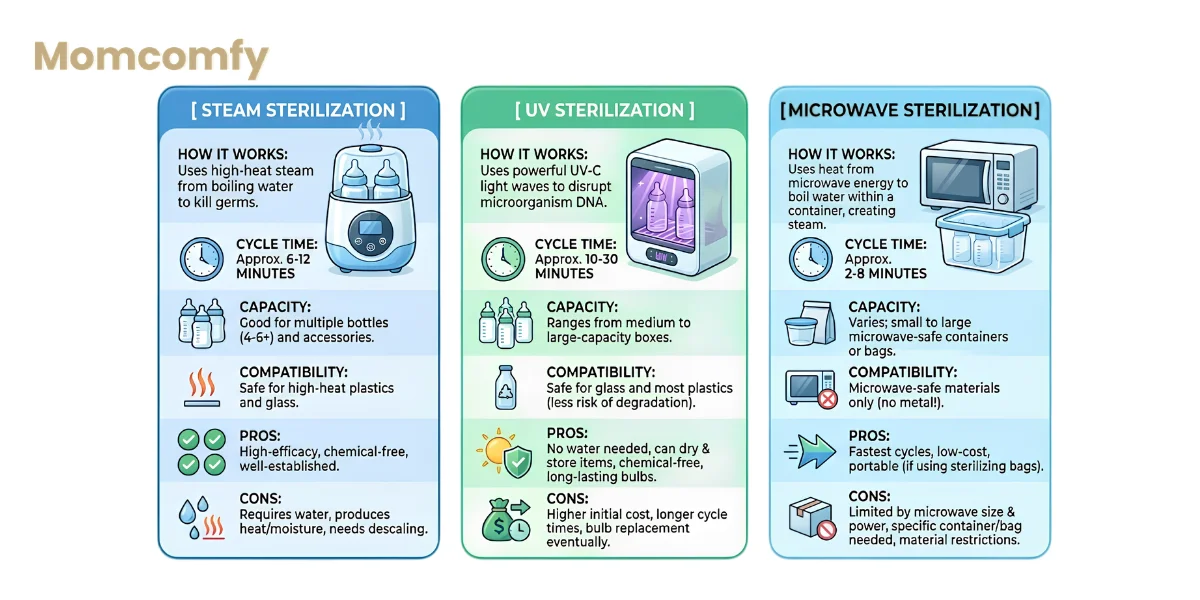
Most modern sterilizers use one of three methods:
Steam Sterilization
Steam sterilizers use high-temperature steam to kill microorganisms. They are among the most popular options because they are fast, effective, and chemical-free.
UV Sterilization
UV sterilizers kill bacteria and viruses with ultraviolet light. Many parents appreciate that items come out dry and ready to use.
Microwave Sterilization
These compact units use microwave-generated steam to sterilize bottles and accessories. They’re budget-friendly and ideal for smaller households.
For many families, the best baby bottle sterilizer 2026 will be one that balances effectiveness, convenience, and capacity.
Why Sterilizing Infant Bottles Matters
Because their immune systems are still developing, newborns and young infants are more susceptible to infections.
Reduced Risk of Illness
Milk residue can create an environment where bacteria grow rapidly. Proper sterilization significantly reduces contamination risks.
Extra Protection for Premature Babies
Healthcare professionals often recommend more rigorous sterilization routines for premature babies or infants with compromised immune systems.
Peace of Mind for Parents
One of the biggest benefits is confidence. Knowing that feeding equipment has been properly sterilized helps reduce stress during an already demanding stage of parenthood.
Supports Safe Feeding Practices
Whether you’re using formula, expressed breast milk, or a combination of both, clean feeding equipment is a critical part of infant nutrition and safety.
According to organizations such as the World Health Organization and the Centers for Disease Control and Prevention, proper cleaning and sterilization of infant feeding equipment can help reduce exposure to harmful pathogens.
How to Choose the Best Baby Bottle Sterilizer 2026
Not all sterilizers are created equal. Before making a purchase, consider the following factors.
1. Capacity
Ask yourself:
- How many bottles do you use daily?
- Are you feeding one baby or multiples?
- Do you need space for pump parts and pacifiers?
A larger capacity model saves time and reduces the number of sterilization cycles needed each day.
2. Sterilization Method
Different methods suit different lifestyles.
Steam Sterilizers
- Fast
- Affordable
- Widely available
UV Sterilizers
- No moisture left behind
- Excellent for drying
- Typically more expensive
Microwave Sterilizers
- Compact
- Travel-friendly
- Budget-conscious
3. Drying Function
Many parents underestimate how useful automatic drying can be.
A sterilizer that dries bottles after sterilization helps prevent moisture buildup and eliminates the need for additional drying racks.
4. Ease of Cleaning
Ironically, the sterilizer itself requires maintenance.
Look for:
- Removable trays
- Easy-access interiors
- Descaling indicators
- Dishwasher-safe components
5. Cycle Speed
Some models complete sterilization in under 10 minutes, while others may take significantly longer.
Busy parents often appreciate shorter cycles during nighttime feedings.
6. Storage Capability
Certain units keep contents sterile for up to 24 hours if the lid remains closed.
This feature can be especially helpful during hectic days.
Real-Life Example
Consider Sarah, a first-time mother returning to work after maternity leave. She pumps multiple times daily and uses six bottles each day. She required several cycles of a small microwave sterilizer, which soon became inconvenient.
She drastically cut down on bottle preparation time and streamlined her daily routine after moving to a larger electric steam sterilizer with a drying feature.
This type of practical consideration often matters more than fancy features.
Bottle Washer vs Sterilizer: Which One Do You Need?
One of the most common questions new parents ask is about the bottle washer vs. the sterilizer.
The answer depends on what each device does.
Bottle Washer
A bottle washer:
- Removes milk residue
- Cleans bottle surfaces
- Uses water and detergent
- Focuses on cleanliness
Sterilizer
A sterilizer:
- Kills bacteria and germs
- Uses steam or UV technology
- Focuses on sanitation
- Provides an extra layer of protection
Do You Need Both?
In many cases, yes.
Cleaning and sterilizing serve different purposes.
Think of it this way:
Washing removes dirt. Sterilizing removes germs.
Some premium systems now combine washing, sterilizing, and drying into a single appliance, making them attractive options for busy households.
If your budget allows, an all-in-one solution can simplify your feeding routine significantly.
Common Mistakes Parents Make When Buying a Sterilizer Feeding Bottle System
Many parents focus only on price and overlook factors that impact long-term satisfaction.
Choosing the Cheapest Option
Budget matters, but reliability matters more.
A low-cost sterilizer that breaks after a few months may cost more in the long run.
Ignoring Capacity Requirements
A unit that only fits three bottles may become frustrating if you use eight or more daily.
Overlooking Drying Features
Wet bottles often require additional handling, increasing preparation time.
Not Considering Counter Space
Some large sterilizers work wonderfully, but dominate small kitchens.
Measure available space before purchasing.
Forgetting Pump Compatibility
Parents who pump regularly should ensure their sterilizer accommodates breast pump components.
This is especially important if you’re also researching the best electric breast pump under $150 and want both products to work efficiently together.
Skipping Maintenance Requirements
Mineral buildup from hard water can affect performance.
Choose models that are easy to descale and maintain.
Best Practices and Expert Tips for Long-Term Use
Once you’ve selected the best baby bottle sterilizer 2026 for your family, proper usage maximizes its effectiveness.
Wash Before Sterilizing
Sterilization is not a substitute for washing.
Bottles should always be completely cleaned before being put in the sterilizer.
Follow Manufacturer Instructions
Different sterilizers have different loading requirements.
Overcrowding can reduce effectiveness.
Use Clean Water
Many manufacturers recommend filtered or distilled water to reduce mineral buildup.
Sterilize More Than Bottles
Consider sterilizing:
- Pacifiers
- Breast pump parts
- Teethers
- Bottle nipples
- Feeding accessories
Establish a Routine
Consistency helps.
Many parents sterilize bottles:
- Once daily
- After each feeding cycle
- Before bedtime
Replace Worn Components
Damaged bottle nipples, valves, or accessories should be replaced promptly.
Sterilization cannot compensate for worn-out feeding equipment.
Think Beyond the Newborn Stage
Cups, utensils, and other feeding accessories can be sanitized with a high-quality sterilizer long after a baby is born.
Choosing a durable unit often provides value for several years.
Conclusion
Choosing the right sterilizer is about more than convenience; it’s about creating a safer feeding environment for your baby. By understanding sterilization methods, evaluating capacity, comparing bottle washer vs sterilizer options, and avoiding common purchasing mistakes, you can make a confident decision that supports your family’s needs.
The best baby bottle sterilizer 2026 is the one that combines safety, efficiency, and ease of use while fitting naturally into your daily routine. Take the time to compare features, think about your feeding habits, and invest in a solution that will simplify life during those busy early months. Both your unborn child and your future self will appreciate it.
Frequently Asked Questions
1. Is a bottle sterilizer necessary?
A bottle sterilizer is not always mandatory, but it is highly recommended for newborns and young infants. Babies have developing immune systems, and sterilizing feeding equipment helps reduce exposure to harmful bacteria and germs. Many parents find a sterilizer provides added peace of mind and saves time compared to manual sterilization methods.
2. Do I need a bottle sterilizer?
You don’t necessarily need a dedicated bottle sterilizer if you’re able to sterilize bottles using boiling water or other approved methods. However, a bottle sterilizer offers convenience, consistency, and efficiency, especially if you’re feeding frequently, pumping breast milk, or managing multiple bottles each day.
3. Is a bottle washer and sterilizer the same thing?
No, a bottle washer and a bottle sterilizer serve different purposes. A bottle washer cleans away milk residue, formula, and other debris, while a sterilizer uses steam or UV technology to kill bacteria and germs. Some advanced appliances combine washing, sterilizing, and drying functions in one unit, but the cleaning and sterilizing processes remain separate.
4. What does a bottle sterilizer do?
A bottle sterilizer uses high-temperature steam, ultraviolet (UV) light, or other approved methods to eliminate harmful microorganisms from baby bottles, nipples, pacifiers, and breast pump parts. Its purpose is to sanitize feeding equipment after it has been properly washed, helping create a safer feeding environment for your baby.
5. How do you sterilize bottles?
To sterilize baby bottles, first wash all parts thoroughly with warm, soapy water and rinse well. Then choose one of these common methods:
- Steam Sterilizer: Place bottles in the unit and run the sterilization cycle according to the manufacturer’s instructions.
- Boiling Water: Submerge bottles completely in boiling water for at least 5 minutes.
- Microwave Sterilizer: Add the recommended amount of water and follow the product instructions.
UV Sterilizer: Arrange cleaned bottles inside the unit and start the UV sterilization cycle.