Your newborn’s nails grow faster than you’d expect and they’re razor-sharp. One tiny scratch across their cheek or eye, and suddenly this becomes your most stressful parenting task.
You’ve probably stood in the baby care aisle wondering: Do I grab a baby nail trimmer or a traditional clipper? They both do the same job, but the difference in safety, ease, and confidence is massive especially for first-time parents.
This guide breaks it all down honestly. You’ll learn exactly how a nail trimmer for newborns compares to the best baby nail clippers, when each tool works best, and what pediatricians and experienced parents actually recommend. We’ll also cover the nail clipper for newborn and the nail filer for newborn so by the end, you’ll know exactly what to buy and how to use it without fear.
What Is a Baby Nail Trimmer and How Is It Different?
A baby nail trimmer is an electric or battery-powered device that files down your baby’s nails using a soft, rotating pad. Instead of cutting the nail in one snap, it gently grinds the nail down in a controlled, gradual way.
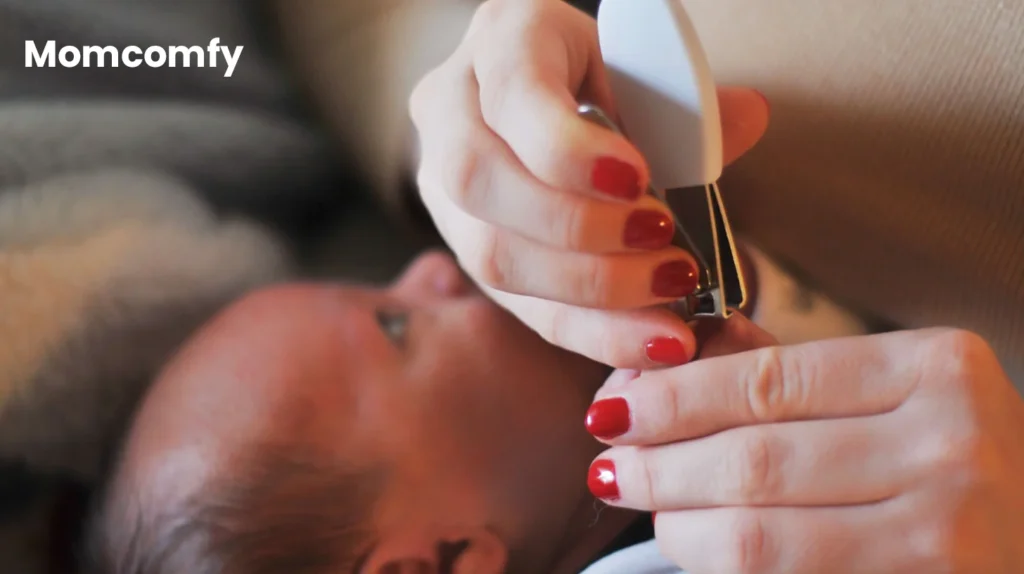
Traditional baby nail clippers, on the other hand, work like tiny scissors where you position the blade and squeeze. They’re fast and precise, but leave zero room for error.
Here’s the core difference in plain terms:
- Baby nail trimmer: Files gradually, minimal risk of cutting skin, great for squirmy babies
- Baby nail clipper: Cuts precisely and quickly, requires steady hands and good lighting
Neither is wrong. Both serve the same purpose. But one is significantly more forgiving for parents who are new to this.
Why Newborn Nail Care Is Genuinely Nerve-Wracking
Newborn nails are thin, soft, and incredibly close to delicate skin. The nail bed extends almost to the fingertip, making it far too easy to nick the skin even with the steadiest hands.
According to the American Academy of Pediatrics (AAP), parents should begin trimming nails as soon as needed, which can be within the first week of life. Many babies are born with nails long enough to scratch.
The challenge? Newborns don’t stay still. They curl their fists, jerk their arms, and wake up the second you’ve built up the courage to start. That unpredictability is exactly what makes choosing the right tool so important.
Baby Nail Trimmer: Pros, Cons, and Who It’s Best For
Pros of a Baby Nail Trimmer
- Virtually eliminates the risk of cutting skin. The rotating file can’t slice through flesh the way a blade can.
- Quiet models are sleep-safe. Many parents use an electric nail trimmer for newborns while the baby sleeps. The motor is whisper-quiet.
- Multiple filing pads for different ages. Most come with coarse, medium, and fine pads suited to newborns, infants, and toddlers.
- No learning curve. You just press and move. No awkward angling required.
- Works on curved nails. The oval pad follows the natural curve of baby nails better than a flat clipper blade.
Cons of a Baby Nail Trimmer
- Slower process. Filing takes longer than clipping, especially if nails are long.
- Requires charging or batteries. Not ideal for travel if you forget to charge it.
- May not work well on very soft nails. Newborn nails are sometimes too pliable for the file to grip effectively.
Who Should Use a Baby Nail Trimmer?
A nail trimmer for newborns is ideal if:
- You’re a first-time parent and clippers feel terrifying
- Your baby is under 3 months old
- Your baby is a light sleeper (you can trim while they sleep)
- You’ve ever nicked skin with clippers before
Baby Nail Clippers: Pros, Cons, and Who They’re Best For
Pros of the Best Baby Nail Clippers
- Fast. One squeeze and you’re done with a nail.
- Precise. Experienced parents can shape and shorten nails in seconds.
- No batteries needed. Always ready, always reliable.
- Compact. Easy to pack in a diaper bag.
Most of the best baby nail clippers on the market come with a built-in magnifying glass, safety guard, or LED light features specifically designed to reduce the risk of accidental cuts.
Cons of Baby Nail Clippers
- Unforgiving if you misjudge. One wrong squeeze and you’ve nicked the skin.
- Requires two-handed coordination. Holding the baby’s hand steady with one hand while clipping with the other takes practice.
- Can be scary for nervous parents. The fear alone can make your hands shake which is the worst state to be in while using a blade near your baby.
Who Should Use a Nail Clipper for Newborn?
A nail clipper for newborn care works well if:
- You’re comfortable with clippers and have good hand control
- Your baby is calm or deeply asleep
- You have another adult to hold the baby’s hand steady
- Your baby is older (3 months+) and has firmer, more defined nails
Best Baby Nail Clippers What to Look For
Whether you choose electric or manual, these are the features that actually matter:
For Electric Baby Nail Trimmers:
- Multiple speed settings: Slower for newborns, faster for toddlers
- Replaceable filing pads: Hygiene matters; pads wear down
- LED light: Helps you see clearly, especially at night feeds
- Quiet motor: Under 45 decibels keeps sleeping babies asleep
- USB charging: More reliable than AA batteries
For the Best Baby Nail Clippers:
- Safety guard or blade cover: Limits how deep the blade can go
- Magnifying glass: built-in 3x magnification is a game-changer
- Non-slip grip: Crucial when you’re holding a squirming baby
- Stainless steel blade: Stays sharp longer, cuts cleaner
- Wide jaw opening: Fits different nail sizes without repositioning
For a Nail Filer for Newborn:
Many parents skip straight to a nail filer for newborn in the first few weeks, a simple emery board or glass file that buffs sharp edges without any cutting risk. It’s the most conservative option and works well during the newborn stage when nails are at their thinnest.
Real-World Scenario: What Most New Parents Actually Do
Here’s what typically happens: A first-time mom notices her two-week-old has scratched his own cheek. She’s scared to use clippers, so she tries peeling the nail which pediatricians strongly advise against, as it can tear too deep.
She picks up an electric baby nail trimmer, uses the newborn filing pad, and trims while the baby sleeps after a feed. Three minutes, zero crying, no blood. It immediately becomes her preferred tool for the first three months.
By month four, she transitions to the best baby nail clippers she can find with an LED light. At that point, her son’s nails are firmer, he’s on a more predictable schedule, and she’s built the confidence to clip accurately.
That progression file first, clip later is what many pediatric nurses and experienced parents recommend.
Can You Use Both? Absolutely.
Many parents keep both tools in their baby care kit. Here’s a practical system:
| Situation | Best Tool |
| Newborn (0–3 months) | Baby nail trimmer or nail filer for newborn |
| Baby is asleep | Electric nail trimmer (quiet models) |
| Quick touch-up, older baby | Nail clipper for newborn |
| Sharp edge after clipping | Nail filer for newborn |
| Travel, no charging option | Manual best baby nail clippers |
Think of them as complementary tools, not competing ones.
Safety Tips That Apply to Both Tools
Regardless of which method you choose, follow these non-negotiable safety practices:
- Trim after a bath. Nails are softer and less likely to split or snag.
- Use natural light or a task light. Never trim in a dimly lit room.
- Press the fingertip skin back. Gently push down on the pad of the fingertip to expose the nail edge cleanly.
- Go slow. Rushing is the number-one cause of accidental cuts.
- Trim when the baby is calm or asleep. Never attempt it when they’re crying or actively moving.
- Trim more frequently rather than cutting more aggressively. Every 3-5 days for newborns, weekly for older babies.
- If you nick the skin, don’t panic. Apply gentle pressure with a soft cloth. Never use a bandage, babies can chew it loose.
What Pediatricians Recommend
Most pediatric nurses and pediatricians agree: the tool matters less than the technique and timing.
That said, many healthcare providers suggest starting with a nail filer for newborn in the first two to three weeks, then transitioning to an electric baby nail trimmer, and eventually moving to clippers as the baby grows and nails become firmer.
The AAP notes that the risk of infection from improperly trimmed nails or bitten-off edges is real reinforcing why having the right tool from the start matters.
Verdict: Which Is Actually Safer?
For most newborns, most parents, and most situations the baby nail trimmer wins on safety.
It removes the sharp blade from the equation entirely. That single factor makes it the more forgiving, less stressful choice for the fragile newborn stage.
But “safest” doesn’t mean “only option.” If you’re confident with clippers and have the right technique, the best baby nail clippers are perfectly safe tools. The real risk comes from rushing, poor lighting, and an unsupported baby hand not the tool itself.
Conclusion:
At the end of the day, the safest tool is the one you’ll actually use correctly. If a baby nail trimmer makes you feel in control, it’s your best choice. If you’re skilled with clippers and trust your technique, the best baby nail clippers will serve you just as well.
For the early weeks, lean toward a nail trimmer for newborns or a simple nail filer for newborn. As your baby grows and you build confidence, a nail clipper for newborn becomes a fast, reliable everyday option.
Don’t let nail trimming be the task that fills you with dread. With the right tool, the right timing, and a calm approach you’ve got this.
Ready to make your pick? Start with an electric baby nail trimmer that includes a newborn filing pad, and add a good pair of the best baby nail clippers to your kit once you’re past the three-month mark. Your future self will thank you.